


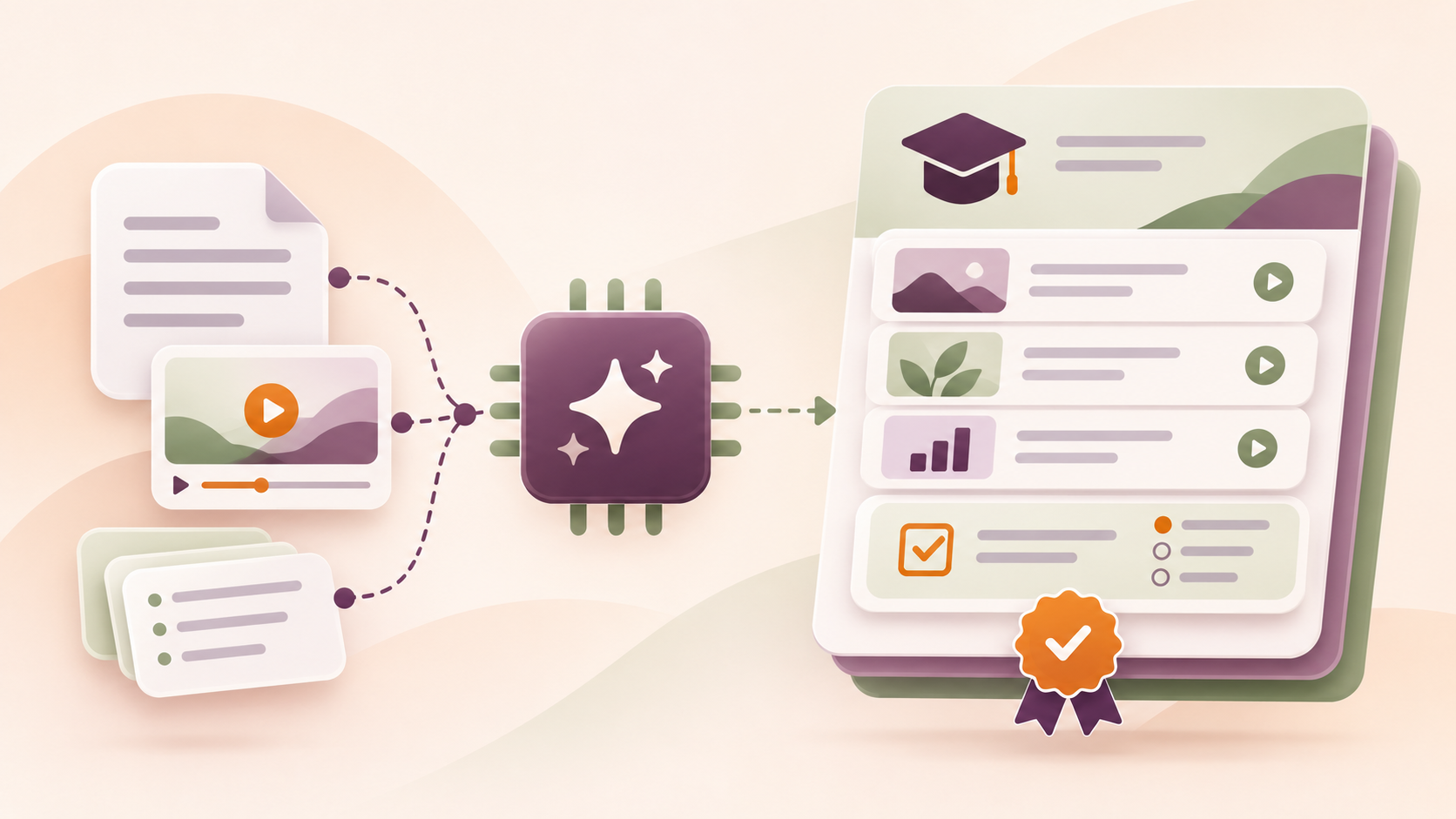
AI is making it easier to develop online courses and sell training to companies. You can turn policy documents, technical guides, slide decks, and subject matter expert notes into early course drafts in far less time than before. But faster course creation does not automatically mean better training. Your judgment, client knowledge, learning design, implementation, and ongoing support still shape whether training works in the real world.
AI Speeds up Early Course Production
Modern authoring tools can help you move from source material to a first draft more quickly. Articulate Rise, Adobe Captivate, and iSpring each offer AI-supported capabilities that may assist with early content, learning assets, and assessment ideas within their authoring workflows.
A typical process might start with a client’s policy document, presentation, technical manual, or interview notes. AI can help you create:
- A preliminary course outline
- Draft lesson text and narration scripts
- Knowledge-check questions
- Image ideas or visual prompts
- Scenario variations for different learner groups
That first draft can save production time, but it should not be treated as a finished course. Product features, plan requirements, names, and supported source formats can change, so you should always verify specific AI capabilities through current official vendor documentation before describing them to clients.
A Course Draft Is Not a Training Solution
Business clients usually need training tied to a clear result. They may want safer work practices, more consistent customer service, stronger management skills, better compliance habits, or smoother adoption of a new process.
AI can organize information, but it cannot reliably decide what matters most for a particular workplace. That work still depends on your review and your conversations with the client. You need to confirm that content is accurate, remove material that does not support the goal, and set learning objectives that describe what learners should know or do.
Context also changes everything. A generic leadership, sales, safety, or compliance course may not fit every organization. One client may use different terms, policies, software, job roles, approval steps, or reporting rules than another. When you tailor content to those details, the training becomes more useful than a broad course built for everyone.
Expert Review Turns Information Into Learning
Before learners see an AI-generated draft, it needs a careful quality review. Subject matter experts and instructional designers should look for outdated guidance, missing context, unsupported claims, inconsistent terminology, and statements that could create legal, compliance, or operational problems.
Good learning design also turns passive reading into practice. Rather than asking learners to remember a fact, you can help them apply it in a situation that resembles their work. Depending on the topic, that may include:
- Demonstrations of a process
- Decision-making scenarios
- Guided practice with feedback
- Role-specific examples
- Assessments that test application
For example, AI may draft a cybersecurity awareness course from a client’s source materials. Your expertise can make it fit the organization by adding its reporting process, approved tools, common risks, and employee roles. You can also create phishing examples that reflect decisions employees may actually face, instead of relying on generic examples that feel distant from their day-to-day work.
Deliver More Than the Course Itself
When you sell training to companies, your offer can include work before, during, and after course creation. Clients may need help defining outcomes, customizing materials, enrolling learners, supporting administrators, launching training, and understanding reports.
Firmwater supports this service model through separate white-label training portals for different business clients. Each client can have its own branded space for learners, courses, administrators, and reporting, while you maintain an organized delivery operation across accounts.
That setup matters because delivery is part of the learning experience. A polished course can still fall short if learners are not enrolled properly, administrators do not know how to manage assignments, or the client cannot monitor participation. Your value includes helping clients put training into action, not simply handing over a course package.
Make Your Expertise Visible in Every Offer
AI can give you more room to focus on the work clients often need most: discovery calls, SME interviews, customization, accessibility review, quality assurance, content updates, and post-launch support. It may also help you summarize source material, draft outlines, suggest assessment questions, or create alternate versions for different groups.
Instead of framing your work only by slides, screens, or production hours, describe the outcomes and services behind the course. Be clear about what AI may speed up and what still requires your review, accountability, and understanding of the client’s business. AI may continue to change course creation, but providers can respond by making their expertise, delivery process, and client support impossible to overlook.
Deliver Branded Training Experiences at Scale
Firmwater helps you sell training to companies through separate branded portals that support each client’s learners and business needs. Our platform gives you a practical way to deliver, manage, and scale training without losing the service and expertise that set your programs apart. Book a demo to see how you can streamline client training delivery.